
Originally from Chicago, Tess Dworman moved to New York in 2009.
Since then, her choreographic work has been presented by New York Live Arts, the Chocolate Factory Theater, Abrons Art Center, and Pageant.
In 2020, she was honored by the Bessie’s New York Dance and Performance Awards as an “Outstanding Breakout Choreographer”.
Tess has held residencies at Lower Manhattan Cultural Council, Snug Harbor, Center for Performance Research, The Church at Sag Harbor, the Bogliasco Foundation, and Movement Research.
As a performer, she appeared in 4 works by Tere O’Connor from 2012 to 2023. She performed in the work of Juliana F. May from 2015 to 2024. She’s worked with several other choreographers including Kim Brandt, Yanira Castro, Moriah Evans, Sam Kim, Julie Mayo, and Mariana Valencia.
In 2020, Tess began her career as an audio describer. She has since written and voiced audio description for several venues including Princeton University, The Shed, Lincoln Center, and The Whitney.
In 2024, she began working at International Digital Centre, a post-production company that provides audio description for film and television. She works at IDC as an audio description writer, narrator, and quality control specialist.
She is on faculty at the Lang Dance Department at the New School.
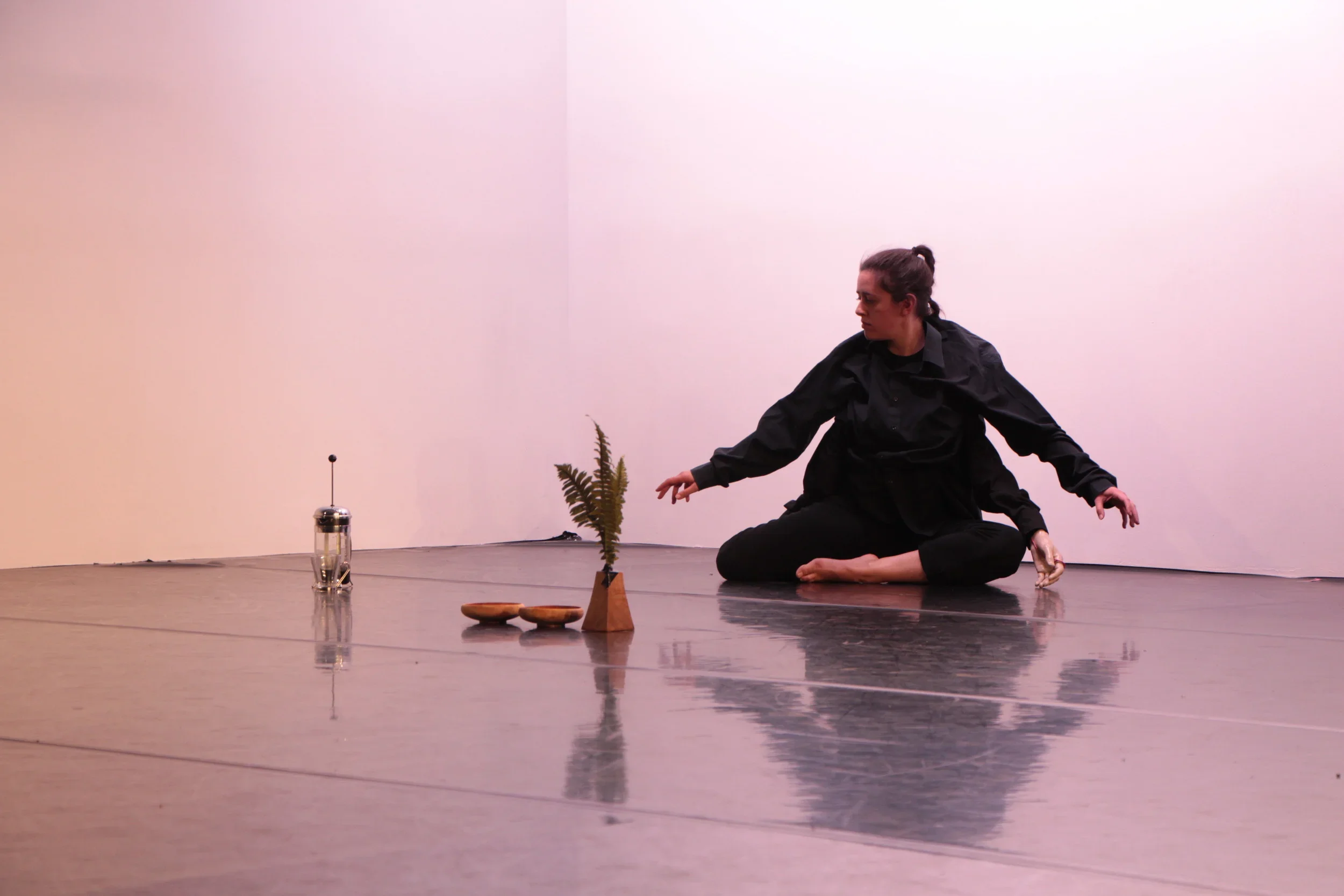
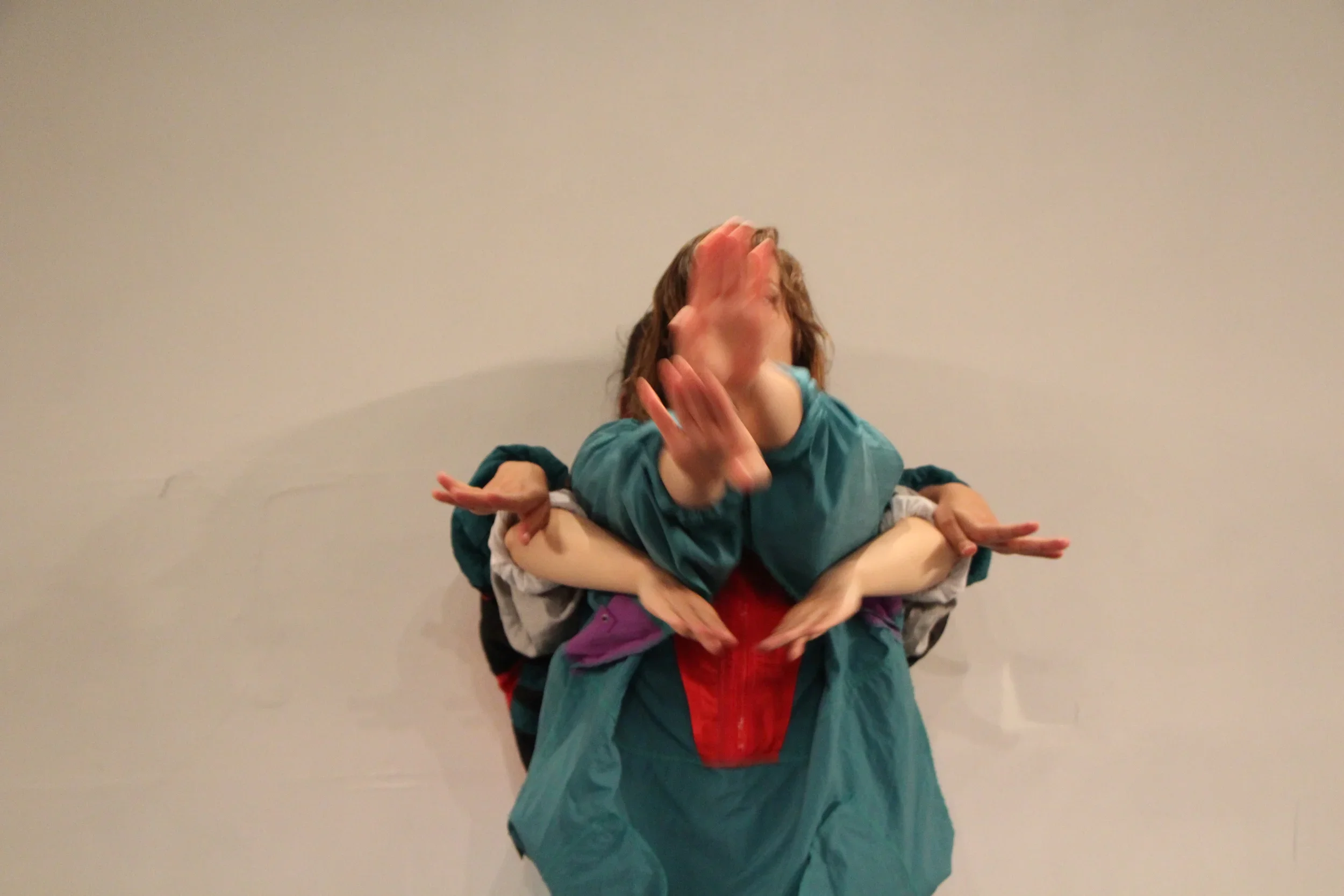

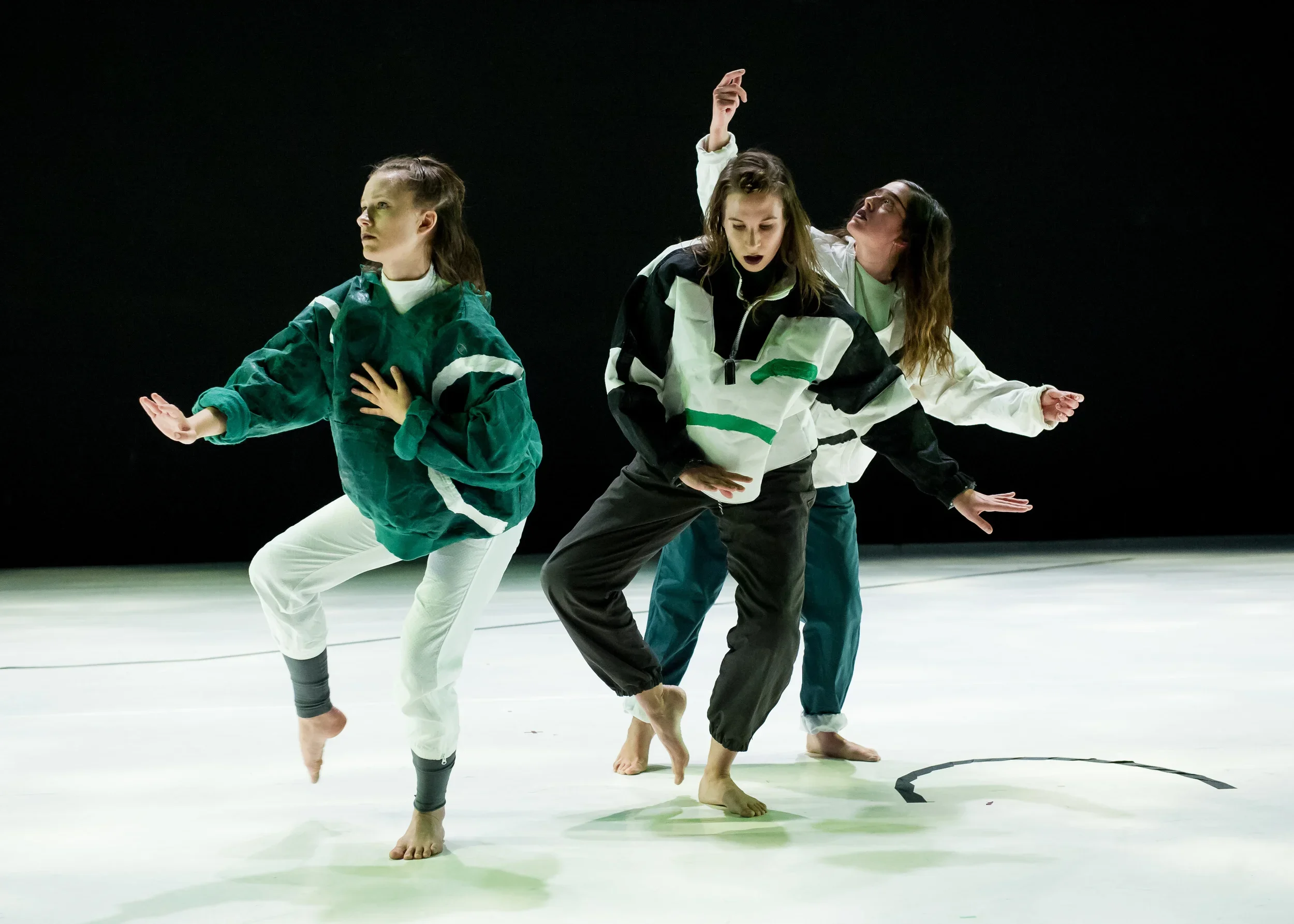
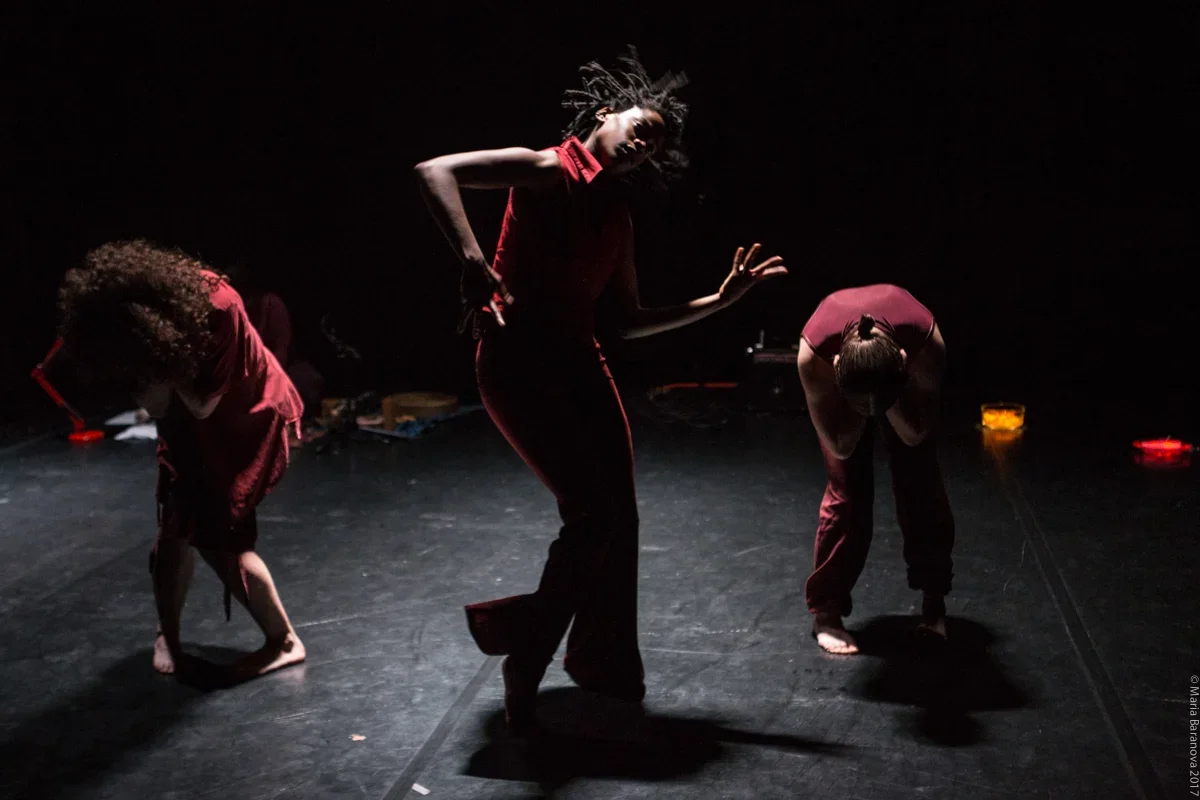
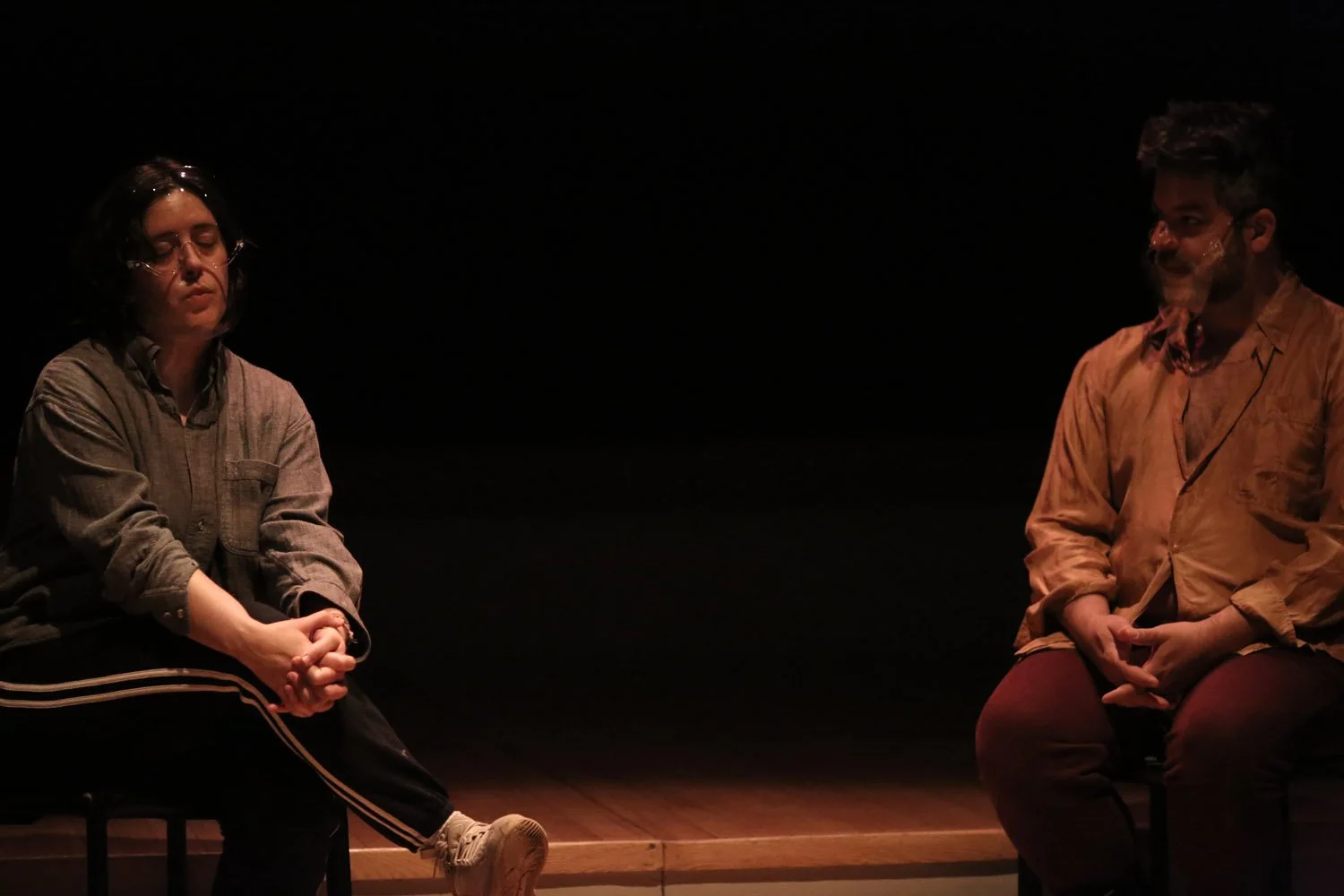
Photos by Anya Liftig, Nir Airieli, Ian Douglas, Maria Baranova, Paula Court
Conversations
-
Tess Dworman: We are eating hot dogs that we grilled in my backyard and we have talked about how our styles of grilling might possibly be related to the way we make our performance work.We were starting to talk about the concept of doing something before you know what it’s about. Or why you’re doing it. We have no idea what we’re going to talk about right now.
Amelia Bande: When you’re making work, you don’t feel like you have to have a theme, but then you sometimes feel forced to define it? Forced is a strong word.
Read more on movementresearch.org.
-
Tess Dworman: I mostly want to talk about Bronx Gothic. I saw the piece at Danspace Project a few years ago and then recently saw the film. I was kind of amazed by how the film actually immersed us deeper into the research. Also the descriptions of your experiences performing, I mean put pretty simply, the things you said were so vivid, and for me as a performer felt so spot-on to what it’s actually like – that improvisational process of navigating material live in front of people and bringing them onto a page with you.
Okwui Okpokwasili: Even though there’s not as much improvisation in it as people might think… the first half-hour is scored so there’s room for me to shift it and change it. But it’s funny I think there was an earlier version at Danspace where even at first, the way the first thirty minutes works, it shifted from when I was doing it on the tour that was captured in Andrew Rossi’s film. By the time the filming happened and I’d been doing the piece for about a year and a half, the score hadn’t changed much for the first thirty minutes. But I guess what absolutely doesn’t change is allowing my internal energy to shift in response to the gaze, the mutual gaze, the giving of it and receiving it or something.
Read more on movementresearch.org.
-
Tess Dworman: Can you talk about what the Domestic Performance Agency is?
Athena Kokoronis: The Domestic Performance Agency is a space. It’s a physical space but it’s also a practice that involves choreographic problem-solving with or through domestic strategy. And what that means is emerging through practice. I came up with the name, Domestic Performance Agency, first and then this idea of a choreographic problem and then being committed to choreographic problem-solving and then domestic strategy. I made up all of these terms and named things and now I’m trying to figure out what it is. […]
Read more at movementresearch.org.
-
I met Tess Dworman to interview her at the café at BRIC in Forte Greene near BAM and the Mark Morris Dance Center. It was one of the first beautiful, sunny days in May this year where everyone was making excuses to be walking outside. Chatting with Tess for a little over an hour with sandwiches, coffee, and a voice recorder on the table was just as delightful and pleasant if not more than catching some precious rays. Tess has a very easy-going way about her; very relaxed and positive and not taking herself seriously at all. She smiles and giggles often and sees the world through a humorous yet oddball lens.
Read more on conectom.leimay.org.
-
The following is an edited interview conversation between Tess and J. Alex Mathews, an arts practitioner who is also based in Brooklyn.
J.A: I wanted to share that after watching a full run of your work, I went home and did something I haven’t done in a long time. I felt the need to bust out my watercolors and doodle![laughs]
T: Nice! [laughs] I love that.
J.A: Your work feels kind of doodley!
T: Yeah, absolutely. Like sketches or something.
J.A: Totally. And I was thinking about how you “circle back” to things in your work, specifically in your piece A Child Retires (2019). How did the performance weekend feel?
T: It was amazing. When we had a full audience, the energy was insane. They were so receptive and made it so much easier. The audience definitely activates the show.
J.A: Because you work with improvisation, I’m curious about what the commitment to improvisation entails for you in the absence of an audience. What does it actually mean to commit to improv?
T: That’s a great question. Well, it’s funny because the product of improvisation is harder to grasp, and there might not actually even be one. I showed A Child Retires to Neil Greenberg when I was in residency and he said, “You’re showing process.” That’s what improvisation does, it shows process. I think the commitment is to stay in something that is unknown, that is confusing, but not become overwhelmed by the chaos. It’s like this sweet spot — a kind of flow state — and really wanting to stay present with whatever that is.
To me, that feels like commitment or sustained attention, instead of choreography; as in creating a plan we know works and then reproducing it. It’s a really active tension in the body. Not clinging to what’s super funny or what works and recreating it, but letting things come and go.
J.A: It feels a lot riskier to expose process in a “performance.” What’s your relationship to risk? Does it feel uncomfortable? Do you find pleasure in that discomfort? Is there less room for failure when it’s improvisational from beginning to end?
T: The solo that I re-mounted (in A Child Retires) was from an earlier piece in 2011. I had improvised in my work before, but that was the first time I said to myself, “I want to make this a ‘start to finish,’ no repeats of anything, improvised performance.” I remember the thrill of telling myself I’m not going to be afraid. I could feel the difference in my body — from going for something out of fear, which is a harrowing experience, and moving towards an opening that is playful. It is a risk, but I do get a good thrill out of it. I know a lot of people don’t like that feeling when they perform. It’s hard enough as it is! But if it is riskier, it’s more fun to me.
J.A: Because of your relationship to process, is it inevitable for humor to play a part in the work?
T: I don’t say to myself, “I’m going to make a funny dance.” I always wonder what will it be when I finally make a dance that is serious. Can I even do that? I don’t know. But I think you might be right about exposing process; there is a lot of humor in that because of the risk and the failure. I want to show the process of thinking. There’s no linear trajectory at any point in any thought process, and there is humor there. There is everything there. It is absurd to imply a linear trajectory or an arc.
It’s a lot of making fun of, which I have mixed feelings about...a friend of mine brought up the cynicism of the piece. I make fun of myself — I make fun of things constantly — and I make fun of the situation of a performance. Is cynicism underneath the humor?
J.A: That’s really interesting. You mention A Child Retires being a “collapse of the maturation of your work.” I feel like that speaks to the sarcasm, cynicism, or making fun of that you’re talking about. What do you think is really underneath your humor?
T: That’s an interesting connection. Well, I’m jokingly referring to this piece as a retrospective.
J.A: Right.
T: And, you know, this is technically my first evening length commission in New York, I’m an emerging artist, blah blah blah...I don’t have to explain the joke to you! [laughs]
J.A: [laughs] No it’s good, you’re contextualizing!
T: It was a very nascent idea. The improvisation was full of potential. I was making a practice for myself and discovering new ways of performing. I’m going back to very early ideas from a piece I made even earlier in my career, and putting them in a polished, commissioned, “final” place. I think of the collapse because it was taking the act of letting go very, very seriously. The image, or idea of a child retiring...finality at a very early stage, a premature stopping point, a decision for a kid to do something mature.
I forget what the connection was, oh the cynicism…
J.A: Right, the potential for cynicism underneath your humor.
T: Well, I don’t know, I’ve got a lot more therapy to do about that but [laughs]...I could regret saying this, but to be doing dance at all seems...just preposterous. It doesn’t make any sense!
It comes from an insecurity that perhaps I’ve had since I got my degree in dance. How will I find my place in the world as an artist? There isn’t one! There isn’t a place for me [laughs] in the world as an artist, I have to create that for myself. Go through the process of making, producing, doing everything. It’s a huge struggle and it’s a big sacrifice. It’s also an amazing privilege.
No one needs me to be doing this! [laughs] So maybe I’m poking fun at the ridiculousness of what it takes to have the gall to be doing an improvised, experimental dance show in 2019.
I’m constantly shaking my head thinking, “Can you believe this?” [laughs]
J.A: [laughs] For how absurd it may be, it feels like people are pretty on board.
T: For this piece in particular I’ve heard a lot of people say they were ready for the joy and levity. They welcomed that. It’s not a very difficult piece. It’s complex in nature, but I think humor gets people on board.
The unbelievable obscurity and obfuscation of meaning in experimental dance is that it can be hilarious! I reach for humor and humorous choices because it’s a way to make people feel like we’re on the same page. I want to bring people in.
J.A: I felt like the work was an invitation to get into some sort of state, instead of walk away with a clear take-away message.
T: What do you think that state was? Well, it made you go home and do watercolors…
J.A: I did doodle! [laughs] I was pleasantly surprised. I felt like I was in on a joke and I didn’t expect to laugh uncontrollably. Whatever confusion I might have felt at times, I had to let that go. That feeling just makes you get in your body. Was that intentional for you? How do you feel about my response?
T: When I say that I try to let people in, I need to create an area of confusion, but not disconnect. It is more of a mood or landscape.
J.A: Yes.
T: For the audience to come away in more of a state than with a take-away message makes a lot of sense to me. That is what I’m trying to do: to share how I’m feeling, how I’m thinking, and how this all works. If the piece is about anything, it’s improvisation. Creating an open, risky feeling for all of us. That’s exciting! The point isn’t to shame you into creating meaning. [laughs] It’s about having this place where new things can occur.
J.A: Nostalgia is so present in your work too. I’m wondering about nostalgia’s relationship to improvisation and surprise.
T: Nostalgia plays a huge role. I often use things like sound and costumes to create a nostalgic — within the last twenty years [laughs] — feeling. It’s also a way for people to access the work without telling anyone specifically what it is. Hearing the Beach Boys, just hearing certain aspects of their song, takes you to a more general place...not general, what am I trying to say?
J.A: Maybe that more open place?
T: Right. Nostalgia is very specific, and it’s personal...it can come out of nowhere and it’s immersive. It can create a tone, texture, and mood. I think that’s why it’s so prevalent in my work. It’s a tool to bring people with me without having to explain myself.
I love to reminisce about shit all-the-time. [laughs] I’m a very nostalgic person.
J.A: [laughs] Has that always been the case?
T: I think so! I have a very sentimental mother. She’s very sentimental about objects. And I’m somewhat sentimental about objects, but I like to think more about the memories; like when I first met a friend, our impressions of each other, and how it became this or that over time...I love to revisit. Maybe it’s connected to process too. I love to be like, “I’ve grown up!”
J.A: [laughs] When I walk in my neighborhood sometimes, I love recalling what it felt like to walk those sidewalks for the first time. How strange I felt. And now, since they’re so familiar to me, I get to think to myself, “Wow, I’ve come so far!” [laughs]
T: [laughs] Right, it’s great. I guess it’s an homage to growth, process, and maturing...things change. That’s all accessible through pop music and some nineties costumes.
J.A: You incorporated other collaborators into what began as a solo endeavor. What did that feel like?
T: It’s been a learning process. Well first of all, figuring out, what I’m trying to do? Teach other people how I improvise so they can do it too, or learn how they improvise so that I can coach them through it? I’m still not sure. Lately, I think less about teaching anyone specifically what I do, I just do it. I don’t need other people to be doing my kind of improvisation.
I’ve been working with Tingying the longest. I first met her in a Movement Research workshop. I was so captivated by her. She was committed to what she was doing, completely immersed inside of it, and I related to what I was seeing. When I had a residency at Snug Harbor in the summer of ‘18 I invited her to come work with me and it was very magical. I had worked with Alex Rodabaugh before and I had been wanting to work with Doug LeCours. They were kind of similar in my mind, [laughs] like Flik and Flak!
J.A: Where did the Irish step dancing come from in their duet?
T: That came from Doug’s background. He was a competitive Irish step dancer as a young child. When I was a kid I was really into older, more traditional forms of folk dance. That section (their duet) used to be more disco, pure hustle. But I love how formal Irish step dancing is. I thought it offered a nice contrast to have that against a fun poppy song. My work is usually a mashup of a lot of genres and structures.
J.A: I sense a tension between expectations of progress and process. Can you unpack that?
T: Process is a lot more unwieldy. Things don’t go as planned. Progress implies success. In one of Tingying’s improvisations actually, she came through the door yelling, “Success! Success!” [laughs]
J.A: [laughs] That’s brilliant.
T: “You’re ALL hired!” [laughs]
In terms of progress in the piece, that’s a “toughy” for me. Maybe it’s there through the trajectory of its structure. Even as it takes unwieldy turns, it does build. I’m resistant to common known structures of a “build-up” or a “fade-out,” but there is a culmination in the trajectory of this piece.
J.A: Do you feel like you need to explain yourself to validate process?
T: [laughs] All the time. But my experience navigating Tere O’Connor’s work started to show me where my skills are as a performer, and I think that’s where my commitment emerged from. I loved the improvisational sections of his work. It became my thing. It’s a very specific skill of performance that I’ve brought to other choreographers’ work. I performed with Sam Kim at the Chocolate Factory as well and I had a solo that was entirely improvised.
I trust process for myself, and I make other people trust what I’m doing. I feel like it’s my own, I have to preserve and protect it. It’s like that cheesy expression, “Protect your magic.” That’s my magic.
J.A: What helps you protect it?
T: Making work definitely does. As hard as it is, it’s important. And performing, being in other people’s processes and working with people I trust. Just getting the chance to practice helps me.
J.A: Living and breathing the absurdity of it all. [laugh]
T: Exactly. [laughs]
J.A: A never-ending existential inquiry!
T: Hugely existential, like, whaaaat?! [laughs] But there’s something there!
J.A: There is something!
T: We keep crawling right back.
February 5, 2020